
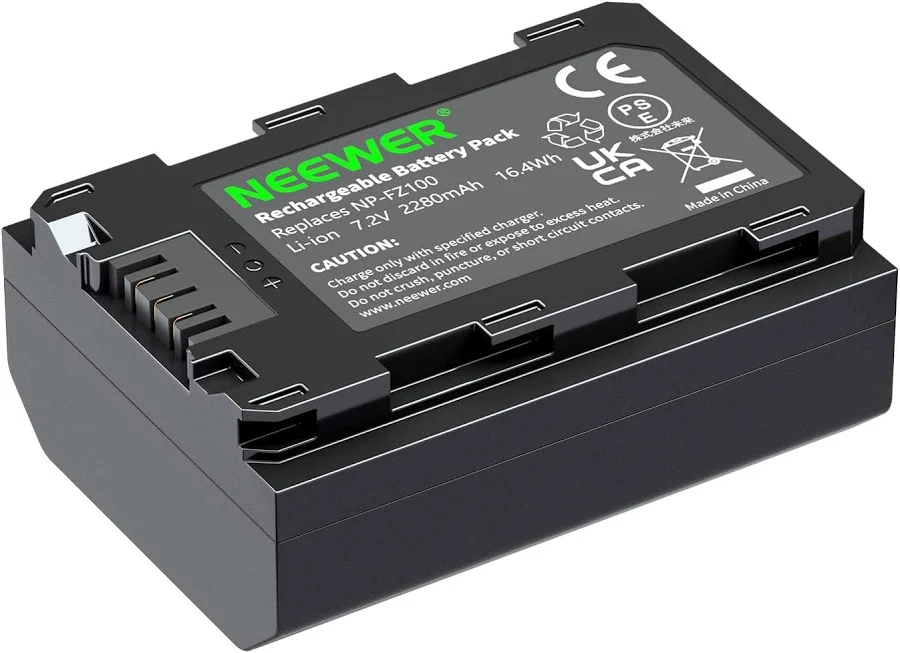
Sony NP-FZ100 Rechargeable Lithium-Ion Battery (2280mAh)
4.8(3K)
From
$48.85
Across 17 retailers

2764 products in the catalogue · 2471 with prices across 8 retailers from $2 to $24995.
From
$48.85
Across 17 retailers
From
$2099.00
Across 16 retailers
From
$10.00
Across 15 retailers

No reviews yet
From
$17.95
Across 15 retailers
From
$59.00
Across 15 retailers
From
$178.00
Across 15 retailers
From
$543.20
Across 15 retailers
From
$899.95
Across 15 retailers
From
$7.95
Across 14 retailers
From
$12.21
Across 14 retailers

From
$18.00
Across 14 retailers
According to the IBISWorld report on Camera and Photographic Equipment Retailing in Australia, the industry generates approximately $1.2 billion in annual revenue. The market has faced significant shifts as smartphone camera technology continues to improve, forcing traditional photography retailers to pivot toward high-end mirrorless systems, professional video equipment, and niche enthusiast gear. Australian retail patterns for these products remain highly cyclical, with significant spikes in consumer spending observed during the final quarter of the calendar year. Retailers often experience a surge in inventory turnover during November due to global sales events, followed by a secondary peak in June as businesses and freelancers look to exhaust their budgets before the end of the financial year. External factors, such as fluctuating import costs and the strength of the Australian dollar, heavily influence the retail pricing of imported electronics. Consequently, consumers often see price volatility throughout the year, making it essential to monitor trends before committing to high-value purchases. Understanding these seasonal fluctuations allows buyers to align their acquisition strategy with periods of lower demand or aggressive retailer clearance cycles.
| Retailer | Products tracked | Price range |
|---|---|---|
| JB Hi-Fi | 1571 | $3.00 – $10499.00 |
| eBay | 1209 | $4.82 – $9998.85 |
| Woolworths | 998 | $3.40 – $9498.91 |
| digiDirect Australia | 960 | $6.00 – $11049.15 |
| Georges Cameras | 838 | $3.75 – $24995.00 |
| BIG W | 799 | $3.40 – $9349.15 |
| RubberMonkey.com.au | 634 | $2.30 – $8299.00 |
| Bunnings Warehouse | 582 | $6.00 – $8799.00 |
When purchasing cameras and tech in Australia, timing is critical to securing the lowest price. Key retail windows include the End of Financial Year (EOFY) sales in June, Black Friday in November, and the traditional Boxing Day sales in December. Click Frenzy events in May and November also offer targeted discounts on electronics. When selecting hardware, prioritize sensor size, lens mount compatibility, and battery life over marketing buzzwords. For photography gear, ensure the product is compatible with Australian power standards, specifically the 230V/50Hz electrical grid; while most chargers are universal, always verify the plug type is Type I. Climate considerations are also vital; Australia’s high humidity and dust levels in certain regions can impact sensitive optical equipment. Always check if the item is an 'Australian stock' unit, as this ensures the product is covered by the manufacturer’s local warranty, which is significantly easier to claim than international grey market imports. Avoid the pitfall of purchasing outdated models simply because they are discounted; check the release date to ensure the firmware and software support remain current for your specific professional or hobbyist requirements.
Australian stock refers to products imported directly by the manufacturer's local subsidiary, ensuring they meet local electrical standards and are fully covered by the official Australian warranty. Grey market items are imported by third parties from other regions. While often cheaper, grey market cameras may lack a valid local warranty, making repairs difficult or costly. Furthermore, they may come with incorrect power adapters or manuals not localized for the Australian market. Always check the retailer's warranty terms before purchasing to confirm if you are buying official local stock.
Yes, camera prices in Australia are often higher than in the United States or parts of Asia due to the 'Australia Tax,' which accounts for import duties, GST, local logistics, and the cost of maintaining local warranty support. While the gap has narrowed due to the rise of global e-commerce, local retailers must factor in these overheads. However, purchasing locally provides consumer law protections under the Australian Consumer Law, which can be difficult to enforce when buying from international websites that do not have a physical presence in the country.
Cameras and photography equipment purchased from authorized Australian retailers are designed for the Australian power grid, which operates at 230V and 50Hz. These devices come with the standard Type I plug. If you purchase equipment from overseas, you may need a travel adapter. However, most modern camera battery chargers are 'multi-voltage' (100V-240V), meaning they will function correctly in Australia with a simple plug converter. Always check the label on the charger brick to confirm it supports 230V input before plugging it into a wall outlet.
The best times to buy cameras in Australia are during major sales events. EOFY (June) is excellent for those looking for tax-deductible gear. Black Friday (November) and Boxing Day (December) offer the most aggressive price drops across a wide range of electronics. Additionally, keep an eye on Click Frenzy events in May and November, which often feature flash sales. Tracking prices on a comparison site for several weeks prior to these events is recommended, as some retailers may artificially inflate prices shortly before a sale to make the discount appear larger.
Yes, the Australian Consumer Law (ACL) provides automatic consumer guarantees for products sold in Australia. If a camera develops a major fault that is not caused by misuse or accidental damage, you are entitled to a repair, replacement, or refund, regardless of the manufacturer's specific warranty period. This protection applies to all goods sold by Australian businesses. If you purchase from an international retailer, these rights do not apply, and you will be subject to the policies of that specific country, which may offer significantly less protection for the consumer.