

- Category
- Televisions (TVs)
- Country
- Australia
- Catalogue products
- 717
- Products with prices
- 614
- Retailer count
- 8
- Min price (AUD)
- $19.24
- Max price (AUD)
- $39995.00
Televisions (TVs) in Australia
717 products in the catalogue · 614 with prices across 8 retailers from $19 to $39995.
Televisions in Australia typically range from $250 for entry-level 32-inch models to over $8,000 for high-end 85-inch OLED or Mini-LED displays. Whether you are looking for a compact screen for a bedroom or a large-format display for a home cinema, the variety of options available to Australian consumers is vast. Navigating this market requires careful consideration of screen technology, resolution, and smart features to ensure you receive value for your investment. At WhatsCheap, we simplify this process by aggregating current pricing from across the country and providing detailed price history charts. By monitoring historical trends, our users can identify when a specific model is at its lowest price point, ensuring they never overpay for their next home entertainment purchase. We provide the data necessary to make informed decisions, helping you compare costs across multiple vendors in one place. With our tools, you can set price alerts for specific models, allowing you to wait for the perfect moment to buy while avoiding the fluctuations common in retail pricing. Our mission is to bring transparency to the Australian electronics market, empowering you to secure the right television at a price that fits your budget.Read televisions (tvs) buying guideHide televisions (tvs) buying guide
Top Televisions (TVs) Products
View All

LG 27" StanbyME 2 Portable Smart Touch Screen
4.7(364)
From
$1544.00
Across 14 retailers


Sony 85" Bravia 5 4K Mini LED TV 2025
4.6(1K)
From
$4375.00
Across 14 retailers


Sony BRAVIA 3 4K HDR Google TV
4.5(6K)
From
$781.00
Across 13 retailers


Sony 65" Bravia 5 4K Mini LED TV 2025
4.6(1K)
From
$2141.00
Across 13 retailers


LG G6 OLED evo AI 4K Smart TV
4.6(587)
From
$4870.00
Across 13 retailers


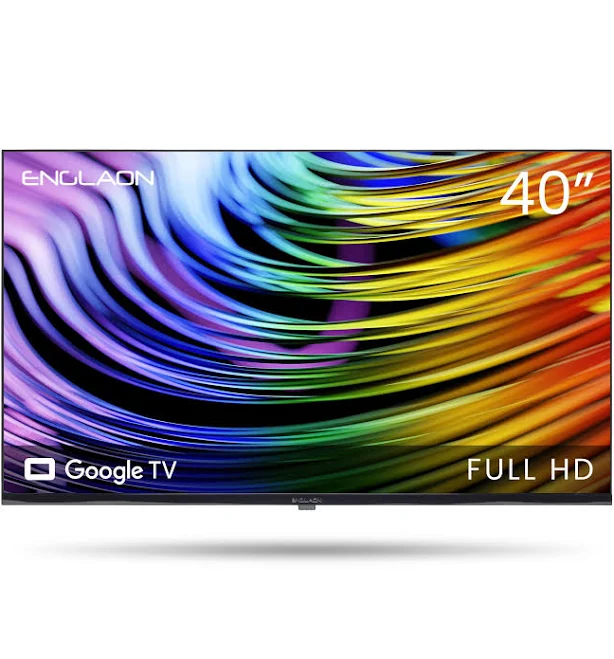
ENGLAON 27’’ Full HD 12V Smart TV With Chromecast & Bluetooth
4.6(106)
From
$549.95
Across 12 retailers
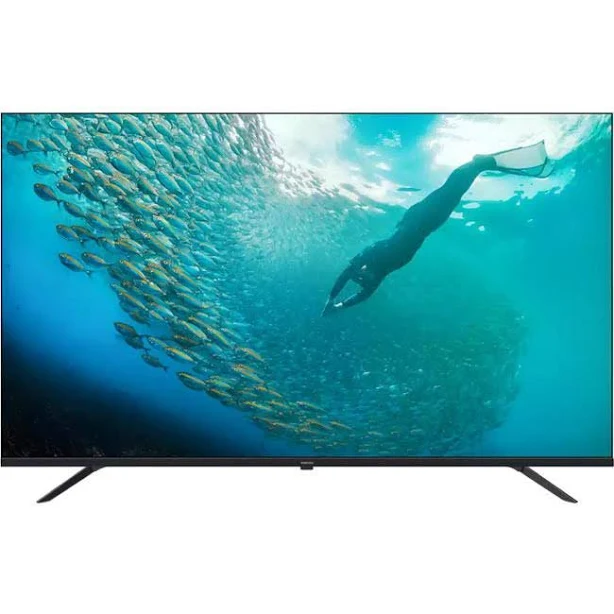
Philips 65" 4K UHD LED Google TV
4.7(382)
From
$654.44
Across 12 retailers

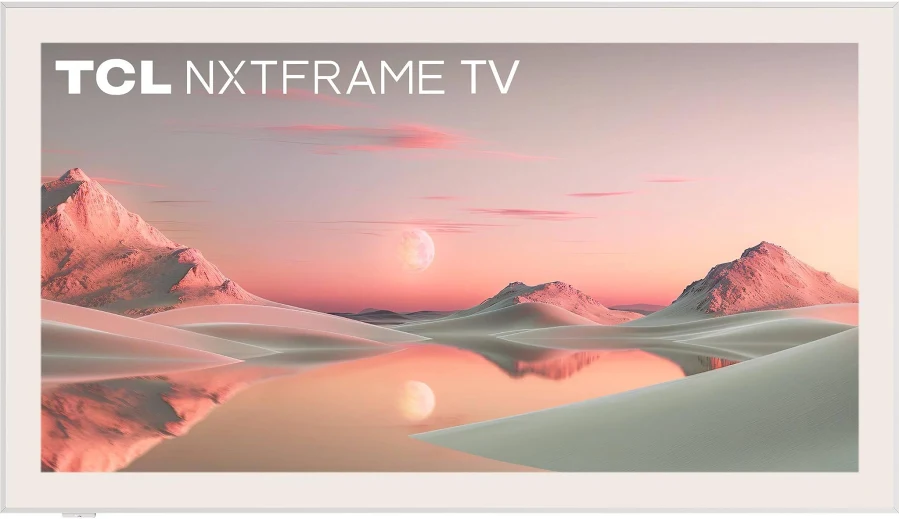
TCL 55" A300W NXTFRAME TV 2024
4.6(857)
From
$849.00
Across 12 retailers


TCL 75" P7K QLED Google TV 2025
4.7(4K)
From
$1045.00
Across 12 retailers
Australian Market Context
According to the IBISWorld report on Consumer Electronics Retailing in Australia, the industry generates approximately $12 billion in annual revenue, with television sales representing a significant portion of this expenditure. The Australian market is characterized by high levels of competition, which often leads to aggressive pricing strategies during key retail windows. Seasonal patterns dictate much of the consumer behavior, with a noticeable surge in television sales occurring during the mid-year and end-of-year periods. Retailers often clear out older inventory in the lead-up to new model releases, which typically arrive in Australian stores during the first quarter of the calendar year. Economic factors, including shifts in household disposable income and the strength of the Australian dollar, also influence the import costs of these electronics. As consumer demand shifts toward larger screen sizes and higher resolutions like 4K and 8K, retailers have adjusted their stock levels to prioritize premium panels. Understanding these cyclical trends is essential for Australian shoppers, as timing a purchase to align with inventory clearance cycles can result in substantial savings compared to buying at the start of a product's lifecycle.
Where to Buy Televisions (TVs) — Price Comparison
| Retailer | Products tracked | Price range |
|---|---|---|
| JB Hi-Fi | 256 | $79.00 – $39995.00 |
| eBay | 220 | $19.24 – $11999.00 |
| Bing Lee Electrics | 106 | $99.00 – $19995.00 |
| Videopro | 106 | $225.00 – $18850.00 |
| BIG W | 105 | $99.00 – $11999.00 |
| Appliance Central | 88 | $210.00 – $7999.00 |
| Appliances Online Australia | 86 | $276.00 – $8630.00 |
| Powerland | 80 | $279.00 – $7999.00 |
Buying Televisions (TVs) in Australia: What to Know
When shopping for a television in Australia, timing is critical to securing the lowest price. Major sales events such as the End of Financial Year (EOFY) in June, Click Frenzy in May and November, Black Friday in late November, and the traditional Boxing Day sales in December are the most opportune times to buy. When evaluating specs, prioritize resolution, panel type (OLED, QLED, or LED), and refresh rates. Ensure the television supports the Australian power standard of 230V/50Hz, which is standard for all locally sourced units. A common pitfall is ignoring the physical dimensions of the space; always measure your cabinet or wall-mount area before purchasing, as large-format TVs can be deceptively heavy and difficult to install. If you are considering an outdoor television, ensure the unit is specifically rated for Australian climate conditions, as standard indoor models will fail due to humidity, dust, and temperature fluctuations. Check for local warranty coverage, as grey-market imports may not be supported by the manufacturer's Australian service centers. Finally, verify that the smart TV operating system supports the local streaming applications you use most frequently, such as ABC iview, SBS On Demand, and Stan, to ensure full functionality upon setup.
Common Questions
What is the best time of year to buy a TV in Australia?
In Australia, the best times to purchase a television are during major retail events like the End of Financial Year (EOFY) in June, Black Friday in November, and Boxing Day in December. Retailers often use these periods to clear out current-year stock to make room for new models arriving in the first quarter. Additionally, Click Frenzy events in May and November provide significant discounts. Tracking price history on our platform can help you confirm if a advertised sale price is genuinely lower than the average market price over the previous months.
Do I need to worry about power compatibility for TVs bought in Australia?
All televisions purchased from authorized Australian retailers are designed to operate on the standard Australian power supply of 230V/50Hz. If you choose to import a television from overseas, you may encounter issues with the power plug type, voltage requirements, and even the digital tuner compatibility. Australia uses the DVB-T/T2 standard for digital television broadcasting. A television purchased from a local retailer is guaranteed to be compatible with the Australian power grid and the local digital broadcast signal, ensuring a seamless plug-and-play experience without the need for voltage converters.
What is the difference between OLED and QLED panels?
OLED (Organic Light Emitting Diode) technology uses self-lit pixels, allowing for perfect blacks and infinite contrast ratios, which is ideal for dark-room movie viewing. QLED (Quantum Dot LED) technology uses a backlight with a quantum dot layer to enhance color and brightness. QLEDs are generally brighter, making them a better choice for rooms with high ambient light or large windows. Both technologies are widely available in Australia, and the choice between them should depend on your specific lighting conditions and whether you prioritize deep contrast or maximum screen brightness.
Are Australian warranties valid if I buy a TV online?
Yes, provided you purchase from an authorized Australian retailer. Under Australian Consumer Law, you are entitled to a warranty for any major electronic product. If you purchase from an overseas-based website, you may find that the manufacturer's Australian service centers will not honor the warranty, or that the product is not compliant with local standards. Always check the retailer's physical address and 'About Us' page to confirm they are an Australian-based entity. Retaining your digital or physical receipt is essential for any potential warranty claim or consumer guarantee issue.
How do I know if a TV will fit in my living room?
To determine if a TV will fit, measure the width and height of the space where it will be placed, including any cabinets or wall-mount clearances. Note that screen sizes are measured diagonally, not by the width of the frame. Check the manufacturer's specifications for the 'dimensions with stand' or 'dimensions without stand' to ensure it fits your furniture. In Australia, many retailers provide the exact dimensions on their product pages. It is also wise to consider the viewing distance; a general rule is to sit at a distance roughly 1.5 to 2.5 times the screen size.
Related Categories
Compare Televisions (TVs) prices by brand
- Samsung Televisions (TVs)114 recently priced products
- LG Televisions (TVs)109 recently priced products
- Sony Televisions (TVs)87 recently priced products
- TCL Televisions (TVs)71 recently priced products
- Hisense Televisions (TVs)59 recently priced products
- Kogan Televisions (TVs)22 recently priced products
- AIWA Televisions (TVs)19 recently priced products
- Englaon Televisions (TVs)16 recently priced products