


- Category
- Communication Devices
- Country
- Australia
- Catalogue products
- 47
- Products with prices
- 40
- Retailer count
- 8
- Min price (AUD)
- $15.37
- Max price (AUD)
- $807.30
Communication Devices in Australia
47 products in the catalogue · 40 with prices across 8 retailers from $15 to $807.
Communication devices in Australia typically range from $49 for basic entry-level handsets to over $2,500 for premium flagship smartphones and satellite-enabled communication tools. Whether you are looking for a ruggedised two-way radio for remote outback travel, a high-end smartphone for daily connectivity, or a reliable satellite messenger, the market offers diverse options to suit every budget and technical requirement. Navigating the sheer volume of available models can be challenging, which is why our service simplifies the process by providing real-time price comparisons and historical pricing data. By tracking price fluctuations over time, we empower Australian consumers to identify genuine discounts and avoid purchasing during periods of inflated retail pricing. Our goal is to ensure you secure the most competitive deal available, providing transparency in a market that often sees rapid price shifts. With our comprehensive database, you can monitor your preferred devices, set alerts for price drops, and make informed purchasing decisions based on historical trends rather than temporary marketing hype. We provide the tools necessary to compare costs across the entire Australian retail landscape, ensuring you never overpay for your essential communication technology.Read communication device buying guideHide communication device buying guide
Top Communication Devices Products
View All


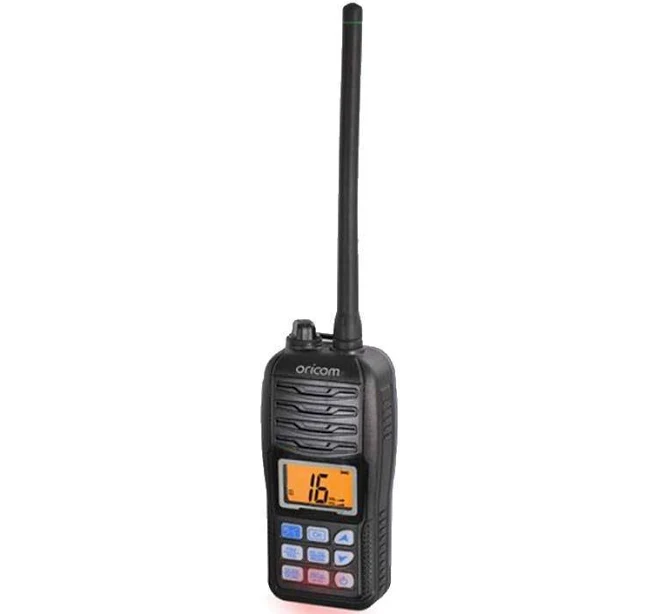
Oricom MX500 5 Watt VHF Marine Radio (Black)
4.4(10)
From
$179.00
Across 11 retailers


Uniden UHF CB Handheld Radio Quad Colour Pack
4.5(209)
From
$32.85
Across 10 retailers


Australian Market Context
According to the IBISWorld report on Telecommunications Equipment Retailing in Australia, the industry generates approximately $8.5 billion in annual revenue, reflecting the essential nature of connectivity in the modern Australian economy. The market is characterised by high levels of competition, with retailers frequently adjusting prices to align with global product release cycles. Seasonal patterns are a significant driver of consumer activity within this sector. Retailers typically see substantial spikes in volume during the lead-up to the new financial year, as businesses upgrade hardware to leverage tax deductions. Furthermore, the Australian retail calendar is heavily influenced by major promotional events such as Black Friday and Click Frenzy, which trigger concentrated periods of high-volume sales. These cyclical patterns are often dictated by inventory clearance strategies, where retailers aim to reduce stock levels of outgoing models before the arrival of new generation devices. Understanding these market dynamics is crucial for consumers, as price volatility is highest during these transition phases. By monitoring these trends, users can better anticipate when retailers are likely to offer aggressive discounting to clear warehouse space, ensuring they align their personal procurement cycles with the broader retail market's natural ebbs and flows.
Where to Buy Communication Devices — Price Comparison
| Retailer | Products tracked | Price range |
|---|---|---|
| JB Hi-Fi | 22 | $69.00 – $639.00 |
| eBay | 21 | $15.37 – $512.95 |
| Woolworths | 21 | $18.86 – $807.30 |
| Uniden | 15 | $34.95 – $569.95 |
| Autobarn | 12 | $34.99 – $639.00 |
| Bunnings | 12 | $49.85 – $638.00 |
| BIG W | 12 | $18.86 – $349.95 |
| Automotive Superstore | 11 | $18.95 – $329.85 |
Buying Communication Devices in Australia: What to Know
When purchasing communication devices in Australia, timing your acquisition to coincide with major retail events is the most effective way to optimise your budget. Key periods include the End of Financial Year (EOFY) sales in June, Click Frenzy events in May and November, and the traditional Black Friday and Boxing Day sales. When evaluating hardware, ensure the device meets Australian power standards of 230V/50Hz, particularly if importing or purchasing from grey-market sellers, to avoid compatibility issues or safety hazards. For outdoor or remote communication devices, consider the device's ingress protection (IP) rating; Australia's harsh climate, characterised by high UV exposure, heat, and dust, requires robust equipment. A common pitfall is failing to check network band compatibility. While most major Australian telcos operate on standard 4G and 5G bands, some international models may lack support for specific local frequencies, resulting in poor reception or limited coverage in regional areas. Always verify that the device is 'Australian stock' rather than an international import, as this ensures the product is covered by Australian Consumer Law (ACL) warranties. ACL provides statutory guarantees that are often more robust than manufacturer-provided warranties, offering protection against defects that occur within a reasonable timeframe after purchase.
Common Questions
Are international versions of smartphones compatible with Australian networks?
While many international smartphones will function on Australian networks, they may not support all local 4G or 5G frequency bands. Specifically, regional areas in Australia often rely on lower-frequency bands like 700MHz (Band 28) for extended coverage. If an international device lacks support for these specific bands, you may experience significantly reduced signal strength or data speeds outside of major metropolitan centres. Always check the device's technical specifications against the frequency bands used by your specific Australian mobile network provider before purchase.
What does the IP rating on a communication device mean?
An Ingress Protection (IP) rating, such as IP67 or IP68, indicates how well a device is sealed against environmental factors. The first digit represents protection against solids like dust, while the second digit represents protection against liquids. For example, an IP68 rating means the device is dust-tight and can withstand immersion in water beyond one metre. In the Australian context, choosing a device with a high IP rating is advisable if you intend to use the equipment in dusty outback conditions or near coastal environments.
Does Australian Consumer Law cover communication devices bought online?
Yes, Australian Consumer Law (ACL) applies to all goods purchased from businesses operating in Australia, regardless of whether the transaction occurs in-store or online. This includes statutory guarantees that products must be of acceptable quality, match their description, and be fit for purpose. If a device develops a major fault, you are entitled to a repair, replacement, or refund. Be aware that if you purchase from an overseas-based website, enforcing these rights can be significantly more difficult than dealing with a local Australian retailer.
When is the best time to buy a new mobile phone in Australia?
The best time to purchase is typically during major retail events like Black Friday in November, Boxing Day in December, or the EOFY sales in June. Additionally, prices for current-generation flagship phones often drop significantly immediately following the announcement of a new model. By monitoring price history, you can identify when retailers are clearing inventory to make room for new stock. Avoiding the initial launch window of a new device can save you several hundred dollars, as early-adopter pricing rarely offers the best value.
Are there specific power requirements for electronics in Australia?
Yes, Australia uses a standard voltage of 230V and a frequency of 50Hz. All electronic communication devices sold by authorised Australian retailers are designed to operate safely within these parameters. If you purchase a device from an overseas retailer, ensure the provided power adapter or charger is compatible with the Australian 230V standard. Using an incompatible charger can lead to overheating, device damage, or electrical fires. Always look for the Regulatory Compliance Mark (RCM) on the device or power supply to confirm it meets Australian safety standards.