

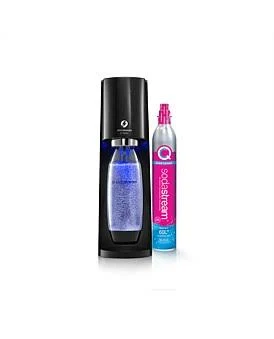
Sodastream Art Black Sparkling Water Maker
4.7(3K)
From
$99.00
Across 15 retailers

178 products in the catalogue · 155 with prices across 8 retailers from $4 to $1599.
From
$99.00
Across 15 retailers


From
$229.00
Across 14 retailers


From
$29.00
Across 13 retailers

From
$192.00
Across 13 retailers

From
$289.95
Across 13 retailers


From
$476.00
Across 13 retailers


From
$4.20
Across 12 retailers


From
$24.00
Across 12 retailers

From
$39.99
Across 12 retailers

From
$46.50
Across 12 retailers

From
$49.00
Across 12 retailers

From
$49.00
Across 12 retailers

From
$57.00
Across 12 retailers

From
$57.00
Across 12 retailers

From
$114.00
Across 12 retailers
According to IBISWorld’s industry reports on household goods retailing in Australia, the kitchenware and homewares sector remains a resilient component of the national economy, with market revenue exceeding $6 billion annually. The drinkware segment specifically experiences significant cyclical demand linked to the Australian climate and social calendar. Retailers report a distinct surge in sales during the warmer months, particularly from October through February, as consumers prioritize outdoor entertaining and hydration solutions. Conversely, the winter period sees a shift toward hot beverage accessories, such as insulated mugs and thermal carafes. Market data indicates that Australian consumers are increasingly favoring sustainable, reusable materials, moving away from single-use plastics toward high-quality stainless steel and glass options. This trend is supported by broader retail data showing that discretionary spending on home goods often spikes during major promotional events, where retailers clear inventory to make room for seasonal stock. Understanding these patterns allows consumers to anticipate when specific drinkware categories will see the deepest discounts, as retailers align their inventory cycles with the Australian retail calendar to maximize turnover and manage warehouse capacity effectively.
| Retailer | Products tracked | Price range |
|---|---|---|
| Amazon AU | 52 | $16.79 – $85.00 |
| eBay | 45 | $11.05 – $318.80 |
| The Good Guys | 43 | $6.00 – $1599.00 |
| Harvey Norman | 39 | $6.50 – $1599.00 |
| BIG W | 35 | $4.00 – $312.30 |
| Woolworths | 29 | $3.50 – $312.30 |
| JB Hi-Fi | 27 | $7.95 – $1599.00 |
| Kitchen Warehouse | 24 | $6.95 – $1449.95 |
When purchasing drinkware in Australia, timing your acquisition with major retail events is the most effective way to secure value. Key opportunities include the End of Financial Year (EOFY) sales in June, Click Frenzy events in May and November, Black Friday in late November, and the traditional Boxing Day sales in December. When evaluating products, prioritize material quality: borosilicate glass offers superior thermal shock resistance, while double-walled stainless steel is essential for maintaining beverage temperatures in Australia’s harsh outdoor heat. For electronic drinkware, such as smart kettles or temperature-controlled mugs, ensure the product meets Australian standards (AS/NZS 3112) for 230V/50Hz power compatibility to avoid safety risks or performance issues. A common pitfall is ignoring the dishwasher compatibility of decorative glassware, which can lead to premature clouding or breakage. Additionally, consider the volume requirements for your specific needs; standard Australian metric measurements for glassware often differ from US-based imports, so verify capacity in milliliters rather than ounces. Always check the warranty terms provided by local distributors, as purchasing from international gray-market sites may leave you without recourse if your items arrive damaged or fail to meet Australian consumer law guarantees regarding product durability and fitness for purpose.
For Australian outdoor use, stainless steel and high-grade polycarbonate are superior to glass. Stainless steel, particularly double-walled vacuum-insulated varieties, is highly effective at keeping drinks cold in extreme heat while remaining shatterproof. Polycarbonate is a lightweight, durable alternative that mimics the clarity of glass without the risk of breakage around pools or on patios. When selecting these, ensure they are BPA-free to meet modern health standards. These materials are better suited to the Australian climate than standard soda-lime glass, which is prone to thermal shock and breakage during high-temperature fluctuations.
In Australia, glassware must comply with general safety requirements under the Australian Consumer Law, which mandates that products must be fit for their intended purpose and safe for use. While there are no specific 'standards' for the chemical composition of basic drinking glasses, products intended for hot liquids must be able to withstand thermal stress without shattering. If you are purchasing electronic drinkware, such as heated mugs, they must strictly adhere to AS/NZS 3112 electrical safety standards. Always check for the RCM (Regulatory Compliance Mark) on any electronic kitchenware to ensure it is safe for the Australian power grid.
To determine if a sale is genuine, use a price comparison tool to view the item's price history over the last six to twelve months. Many retailers inflate the 'original' price before a sale to make the discount appear larger. By checking the historical data, you can identify the true 'floor price' of the product. If the current sale price is significantly higher than the lowest price recorded in the past six months, it may be worth waiting for a deeper discount during major events like Black Friday or Boxing Day.
Buying sets is generally more cost-effective if you are outfitting a new kitchen, as the per-unit price is usually lower than purchasing individual items. However, individual pieces are preferable if you have limited storage space or if you only need to replace a specific type of glass. Sets are ideal for entertaining, ensuring a uniform aesthetic for your table. If you choose sets, check the quality of each piece, as some manufacturers include lower-quality items in bulk packs. For high-end glassware, individual purchases allow you to build a collection over time without a large upfront cost.
Glassware cloudiness, often called 'glass sickness' or etching, is typically caused by a combination of high water temperatures, harsh detergents, and the mineral content in Australian tap water. Soft water can actually accelerate the leaching of minerals from the glass itself. To prevent this, use a dishwasher-safe detergent with a lower pH, avoid high-heat drying cycles, and use a rinse aid to prevent mineral deposits from bonding to the surface. If the cloudiness is permanent, it is likely etching, which occurs when the glass surface has been physically damaged by the cleaning process.