

- Category
- Digital Cameras
- Country
- Australia
- Catalogue products
- 642
- Products with prices
- 576
- Retailer count
- 8
- Min price (AUD)
- $10.85
- Max price (AUD)
- $10499.00
Digital Cameras in Australia
642 products in the catalogue · 576 with prices across 8 retailers from $11 to $10499.
Digital cameras in Australia typically range from $450 for entry-level compact models to over $8,500 for professional-grade full-frame mirrorless systems. You can find these devices stocked at major Australian retailers including JB Hi-Fi, Camera House, and Ted's Cameras. Whether you are searching for a versatile vlogging camera, a high-resolution landscape shooter, or a lightweight travel companion, the variety available in the local market is extensive. Navigating these options can be complex, as pricing fluctuates frequently based on stock levels and manufacturer promotions. At WhatsCheap, we simplify your search by providing real-time price comparisons and detailed historical price data. By monitoring these trends, you can identify when a specific model hits its lowest price point, allowing you to make an informed purchase without overpaying. We aggregate data from across the country to provide a transparent overview of the current digital imaging landscape, helping you secure the right gear for your photography needs while staying within your budget. Our service is designed to remove the guesswork from your shopping experience, ensuring that you always have a clear view of the market before committing to a purchase. By leveraging our historical price charts, you can see if a current discount is genuine or merely a temporary fluctuation, empowering you to buy with total confidence.Read digital camera buying guideHide digital camera buying guide
Top Digital Cameras Products
View All
Sony SEL50F12GM FE 50MM F1.2 GM Camera Lens
4.9(751)
From
$2099.00
Across 16 retailers


VTech Kidizoom Duo FX Kids Camera (Blue)
4.6(406)
From
$59.00
Across 15 retailers

Nikon Forestry Pro II Range Finder
4.9(111)
From
$543.20
Across 15 retailers


GoPro HERO13 Black Creator Edition
4.6(4K)
From
$899.95
Across 15 retailers

Fujifilm Instax Mini Film Photo Album (Pastel Blue)
4.9(25)
From
$12.21
Across 14 retailers


GoPro Magnetic Latch Ball Joint
5.0(14)
From
$64.95
Across 14 retailers


Polaroid Now Generation 3 Instant Camera (Coral)
3.8(288)
From
$174.49
Across 14 retailers

Oricom WRC001 IPX6 Wireless Reversing Camera with Magnetic Base
4.4(361)
From
$199.00
Across 14 retailers


Insta360 X4 8K 360 Action Camera
4.7(3K)
From
$518.00
Across 14 retailers

GoPro MAX 2 8K 360 Action Cam
4.6(297)
From
$577.00
Across 14 retailers
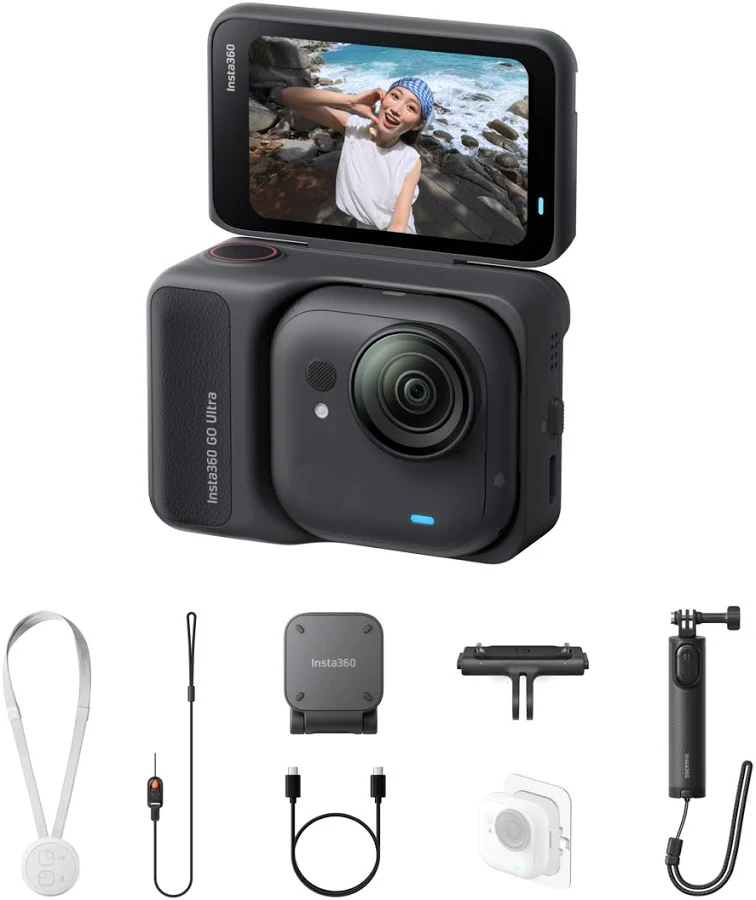
Insta360 GO Ultra
4.8(1K)
From
$635.98
Across 14 retailers

Canon EOS R10 Mirrorless Camera with RFS 18-45STM Lens
4.7(1K)
From
$1263.00
Across 14 retailers


Nikon Nikkor Z 28-135mm f/4 PZ Camera Lens
4.8(29)
From
$2794.00
Across 14 retailers

Nikon Z8 Mirrorless Camera (Body Only)
4.9(1K)
From
$3799.00
Across 14 retailers

Insta360 X5 Lens Cap
5.0(24)
From
$13.99
Across 13 retailers


Fujifilm Instax Square Film Monochrome (10 Pack)
4.6(65)
From
$19.95
Across 13 retailers

Hot-26%
Fujifilm Instax Square Film Rainbow (10 Pack)
4.8(178)
From
$21.56
Across 13 retailers
Australian Market Context
According to an IBISWorld report on the Camera and Photographic Equipment Retailing industry in Australia, the market has faced significant structural changes due to the ubiquity of high-quality smartphone cameras. Despite this, the sector maintains an annual revenue exceeding $600 million, driven by a dedicated segment of professional photographers, enthusiasts, and content creators. The Australian market exhibits distinct cyclical patterns, with retail activity peaking during the final quarter of the calendar year. This surge is heavily influenced by the convergence of Black Friday, Cyber Monday, and the lead-up to the Christmas holiday period. Additionally, the Australian retail landscape experiences a secondary spike in activity during the end of the financial year (EOFY) in June, as businesses seek to upgrade equipment for tax deduction purposes. Unlike markets in North America, Australian retailers often align their inventory cycles with these specific fiscal and seasonal windows. While the overall volume of unit sales has stabilized, the average transaction value has trended upward as consumers shift toward high-margin mirrorless systems and specialized lenses. This shift reflects a maturing market where consumers prioritize long-term investment in optical quality over disposable, low-cost digital imaging devices.
Where to Buy Digital Cameras — Price Comparison
| Retailer | Products tracked | Price range |
|---|---|---|
| eBay | 306 | $10.85 – $9998.85 |
| JB Hi-Fi | 303 | $14.00 – $10499.00 |
| Georges Cameras | 259 | $15.48 – $9598.00 |
| Ted's Cameras | 252 | $14.95 – $9999.95 |
| Woolworths | 234 | $12.21 – $9498.91 |
| digiDirect Australia | 212 | $13.00 – $9598.00 |
| Videopro | 192 | $22.00 – $9980.00 |
| Camera House | 181 | $14.95 – $9999.00 |
Buying Digital Cameras in Australia: What to Know
Purchasing a digital camera in Australia requires an understanding of both technical specifications and local retail cycles. To secure the best value, plan your purchase around major Australian sales events, specifically the EOFY sales in June, Click Frenzy events in May and November, and the traditional Boxing Day sales in December. When selecting a camera, prioritize sensor size—APS-C or full-frame—over megapixels, as sensor size dictates low-light performance and depth of field. Ensure the camera supports local Australian power standards; all official imports must comply with 230V/50Hz electrical requirements. If you are purchasing from international grey-market sellers, be aware that chargers may require adapters and local warranty support may be voided. Climate is another critical consideration for Australian photographers; if you plan to shoot in coastal or outback environments, look for cameras with weather-sealing ratings to protect against dust, humidity, and salt spray. A common pitfall is ignoring the "total cost of ownership," which includes essential accessories like high-speed SD cards, spare batteries, and protective bags. Always verify whether the camera is an official Australian stock unit, as this ensures you are covered by Australian Consumer Law, providing robust protection against manufacturing defects that grey-market imports often lack.
Common Questions
Are grey market cameras worth buying in Australia?
Grey market cameras are imported by third parties rather than the official Australian distributor. While they are often cheaper, they carry significant risks. You may not be eligible for the manufacturer's local warranty, meaning repairs must be handled by the seller or sent overseas at your own expense. Furthermore, these units may come with non-Australian power plugs or manuals in foreign languages. Under Australian Consumer Law, you have fewer protections if the product is faulty compared to purchasing official Australian stock, which is backed by local support and service networks.
What is the best camera for beginners in Australia?
For beginners, an entry-level mirrorless camera with an interchangeable lens system is usually the best starting point. Models from brands like Canon, Nikon, and Sony offer extensive lens ecosystems that allow you to grow your skills over time. Look for cameras that feature 'Auto' modes for ease of use but also provide full manual controls for when you are ready to learn about aperture, shutter speed, and ISO. Many Australian retailers offer 'kit' bundles that include a standard zoom lens, which is a cost-effective way to start your photography journey.
Do I need to pay GST on cameras bought from overseas?
Yes, since 2018, the Australian government requires GST to be collected on all imported goods, regardless of the value. If you purchase a camera from an international website, the retailer is often required to collect the 10% GST at the point of sale. If they do not, you may be charged the tax and additional processing fees by the Australian Border Force upon the item's arrival. Always factor this 10% cost into your budget when comparing international prices against local Australian retail prices to ensure you are making an accurate comparison.
How do I check if a camera is official Australian stock?
To confirm a camera is official Australian stock, check the product description on the retailer's website for terms like 'AU Stock' or 'Australian Warranty.' You can also contact the manufacturer's Australian customer support line and provide the serial number of the device. Official stock is imported by the manufacturer's local subsidiary and is specifically calibrated for the Australian market. This ensures that the camera is fully compatible with local power outlets and is covered by the manufacturer's comprehensive Australian warranty program, which is the gold standard for consumer protection.
When is the best time of year to buy a camera in Australia?
The best time to buy a camera in Australia is during major promotional periods. The end of the financial year (EOFY) in June is excellent for finding deals, as retailers clear stock before the new financial year. November is also a prime time due to Black Friday and Cyber Monday sales, which have become major events in the Australian retail calendar. Additionally, keep an eye on 'Click Frenzy' events in May and November. These periods often see significant price drops, allowing you to save hundreds of dollars compared to purchasing at full retail price.
Related Categories
Compare Digital Cameras prices by brand
- Fujifilm Digital Cameras104 recently priced products
- Sony Digital Cameras86 recently priced products
- Nikon Digital Cameras68 recently priced products
- Canon Digital Cameras53 recently priced products
- DJI Digital Cameras42 recently priced products
- Panasonic Digital Cameras31 recently priced products
- Polaroid Digital Cameras28 recently priced products
- Insta360 Digital Cameras26 recently priced products