


- Category
- Charging Cables
- Country
- Australia
- Catalogue products
- 192
- Products with prices
- 171
- Retailer count
- 8
- Min price (AUD)
- $3.95
- Max price (AUD)
- $149.00
Charging Cables in Australia
192 products in the catalogue · 171 with prices across 8 retailers from $4 to $149.
Charging cables in Australia typically range from $5 to $60 depending on brand, length, and power delivery capabilities. Whether you are looking for USB-C, Lightning, or Micro-USB connectors, the sheer volume of available stock can make price fluctuations difficult to track manually. Consumers often find themselves overpaying for standard cables simply due to a lack of visibility into current market pricing. This is where WhatsCheap provides essential utility for the Australian shopper. By aggregating real-time pricing data from across the country and providing comprehensive price history charts, we empower you to identify genuine discounts and avoid inflated retail markups. Our platform ensures you can verify if a sale price is truly competitive or merely a temporary reduction from an artificially high baseline. By leveraging our historical data, you can make informed purchasing decisions, ensuring you secure the best value for your hardware accessories while avoiding the frustration of missing out on genuine price drops. We simplify the search process, allowing you to filter by retailer, brand, and connection type to find the exact cable you need at the lowest available price point in the Australian market.Read charging cable buying guideHide charging cable buying guide
Top Charging Cables Products
View All


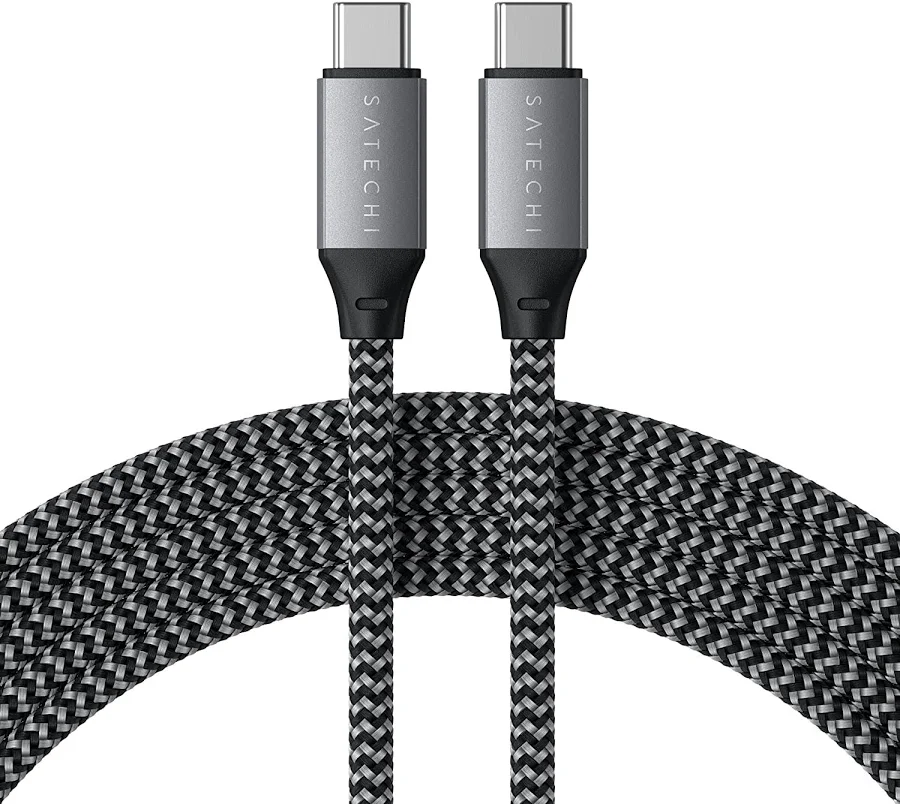
Satechi USB-C 100W Charging Cable 2m
4.8(248)
From
$29.95
Across 13 retailers


Apple USB-C to Lightning Cable (2M)
4.7(38K)
From
$8.35
Across 12 retailers

Belkin Lightning Audio + Charge RockStar Charger
3.8(601)
From
$10.26
Across 12 retailers

Apple Lightning to USB Cable (1M)
4.5(52K)
From
$10.57
Across 12 retailers


Belkin Lightning to USB Braided Cable 1m White
4.7(1K)
From
$14.00
Across 12 retailers


Australian Market Context
The Australian consumer electronics accessory market remains highly competitive, driven by the constant cycle of new smartphone and laptop releases. According to the Australian Retailers Association, the broader electronics category continues to see significant shifts in consumer spending habits, particularly as households consolidate their technology needs. The market for mobile accessories, including charging cables, is estimated to be worth hundreds of millions of dollars annually in Australia. Retail activity follows distinct seasonal patterns, with significant spikes in volume during the November Black Friday and Cyber Monday period, which has effectively overtaken the traditional post-Christmas sales. Further activity is observed during the May and November 'Click Frenzy' events, where retailers aggressively discount peripherals to clear inventory. Additionally, the end of the financial year (EOFY) in June represents a critical period for business-to-consumer sales, as Australians look to upgrade their home office setups. These cyclical trends are heavily influenced by global supply chain logistics and the release schedules of major manufacturers like Apple and Samsung. As consumers increasingly prioritize high-wattage charging for fast-charging devices, retailers have adjusted their stock profiles to favor premium, high-speed cables, which now command a larger share of the total market revenue compared to legacy low-speed alternatives.
Where to Buy Charging Cables — Price Comparison
| Retailer | Products tracked | Price range |
|---|---|---|
| eBay | 89 | $3.95 – $85.95 |
| JB Hi-Fi | 82 | $12.00 – $149.00 |
| BIG W | 79 | $4.65 – $85.95 |
| Woolworths | 75 | $4.58 – $85.95 |
| Kogan.com | 55 | $7.37 – $79.95 |
| Dick Smith AU | 53 | $14.95 – $79.95 |
| Harvey Norman | 52 | $12.95 – $99.00 |
| digiDirect Australia | 39 | $11.95 – $79.20 |
Buying Charging Cables in Australia: What to Know
When purchasing charging cables in Australia, timing your buy is essential for securing the best price. Major retail events like the EOFY sales in June, Black Friday in November, and Boxing Day in December are the optimal times to stock up on high-quality cables. When evaluating products, prioritize the connector type—USB-C is now the standard for most modern devices—and ensure the cable supports the required wattage for your specific hardware. For laptops, look for cables rated for 60W or 100W Power Delivery (PD). Be wary of 'cheap' uncertified cables, as these often lack the necessary shielding and internal components to handle the 230V/50Hz standard safely when paired with wall adapters. In the Australian climate, avoid low-quality plastic insulation that can become brittle or degrade under high heat, particularly if used in vehicles or near windows. Always check for MFi (Made for iPhone) certification if purchasing Lightning cables to ensure compatibility with Apple’s power management protocols. A common pitfall is ignoring cable length; while long cables are convenient, they often experience higher resistance, which can slow down charging speeds if the gauge of the internal wire is insufficient. Always verify the gauge rating if you require fast charging over a distance greater than two metres.
Common Questions
Are cheap charging cables safe to use in Australia?
Safety depends on whether the cable meets Australian electrical standards. While generic cables are often cheaper, they may lack the necessary internal shielding or safety certifications required for use with Australian 230V power outlets. Using uncertified cables can lead to overheating, device damage, or, in rare cases, electrical fires. It is recommended to purchase cables that carry the RCM (Regulatory Compliance Mark) or are certified by the device manufacturer, such as MFi for Apple products, to ensure they meet local safety and performance benchmarks.
What is the difference between a charging cable and a data cable?
A charging-only cable is designed solely to carry electrical current to your device's battery, lacking the internal data wires required for file transfer. Conversely, a data cable includes dedicated wires for both power and data transmission, allowing you to sync photos, music, or documents between your phone and a computer. If you need to back up your device or transfer files, ensure the cable is explicitly labeled as a 'data' or 'sync' cable, as charging-only cables will not be recognized by your computer.
Do I need a specific cable for fast charging my phone?
Yes, fast charging requires both a compatible wall adapter and a cable capable of handling higher power delivery. For modern smartphones, this usually means a USB-C to USB-C cable that supports Power Delivery (PD) standards. If your cable is not rated for the wattage your charger outputs, the device will default to a slower charging speed. Always check the packaging for the maximum wattage rating, such as 60W or 100W, to ensure it matches the requirements of your fast-charging wall brick.
How long should a high-quality charging cable last?
The lifespan of a charging cable depends on build quality and usage habits. Braided nylon cables generally offer better durability against fraying and bending compared to standard rubberized plastic cables. With daily use, a well-constructed cable should last between 12 to 24 months. Signs of wear, such as exposed wires, cracked insulation, or intermittent connection, indicate the cable should be replaced immediately to prevent short circuits. Storing cables by coiling them loosely rather than folding them sharply can significantly extend their functional life.
Where is the best place to buy charging cables in Australia?
In Australia, the best place to buy depends on your urgency and budget. Major electronics retailers like JB Hi-Fi and Officeworks offer a wide range of certified, high-quality cables with immediate in-store pickup. For those looking for the lowest price, online marketplaces and specialized tech retailers often provide better value, especially during promotional events like Click Frenzy or Black Friday. Using a price comparison tool allows you to track these retailers simultaneously, ensuring you don't pay a premium for a cable that is currently discounted elsewhere.